
Caravan Finance
Caravan Finance 101: The Complete Guide
By Joseph Nowland, Director and Senior Finance Broker · 18 July 2026 · 5 min read
Last reviewed 26 July 2026
How does caravan finance work in Australia?
A caravan loan is a secured loan. A lender advances the funds to buy the van, holds the caravan itself as security against the debt, and you repay the principal plus interest in regular instalments over an agreed term. It is the same fundamental structure as a car loan, applied to a different asset.
The security arrangement matters because it shapes everything else. Because the lender can recover the caravan if repayments stop, it can lend against the asset with more confidence, which is why the secured structure is the most common form of caravan finance in Australia. The caravan is registered on the Personal Property Securities Register as encumbered until the loan is repaid.
Terms commonly run from one to seven years. Shorter terms mean higher repayments and less total interest. Longer terms ease the monthly figure but cost more over the life of the loan. Where the balance sits for you depends on your budget and how long you plan to keep the van.
What kinds of caravans can you finance?
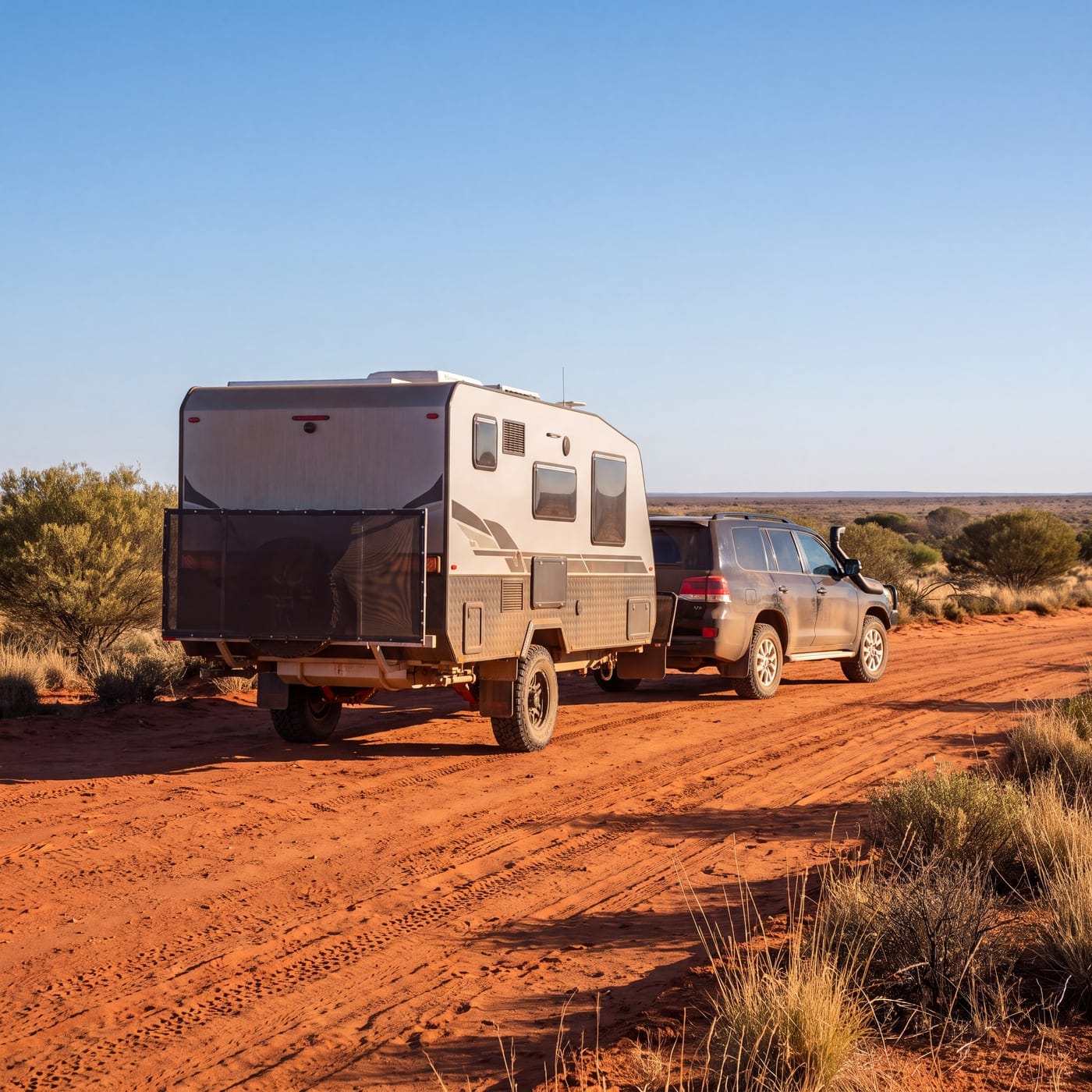
The market is broader than most first-time buyers expect. Lenders on our panel finance pop-tops, full caravans, off-road tourers, campervans, motorhomes and fifth-wheelers, bought new from a dealer, used from a dealer, or privately from another owner.
The asset's age and condition drive lender appetite more than its type. A new caravan opens the widest lender pool because its value and history are clean. Older vans narrow the pool, because many lenders set a maximum asset age at the end of the loan term, so a fifteen-year-old van on a five-year loan will not fit every lender's policy. Specialist lenders pick up much of what the mainstream declines.
What do lenders look at when you apply?
Your credit file, your income and the asset itself carry most of the weight. The credit file tells the lender how you have handled debt before. Clean repayment history opens mainstream options, while past defaults shift the application toward specialist lenders who assess what happened and how long ago.
Income assessment depends on how you earn. PAYG applicants provide recent payslips. Self-employed buyers use tax returns, or alternative documents through low-doc caravan finance if their paperwork does not fit the standard mould.
Then the caravan itself comes into it, through its age, its price and where it is being bought. Each lender has its own rules on all three, which is why the same borrower can be declined by one lender and approved on strong terms by another. In caravan lending, comparing the market before applying is not an optional extra. It is the whole job.
What documents do you need for a caravan loan?
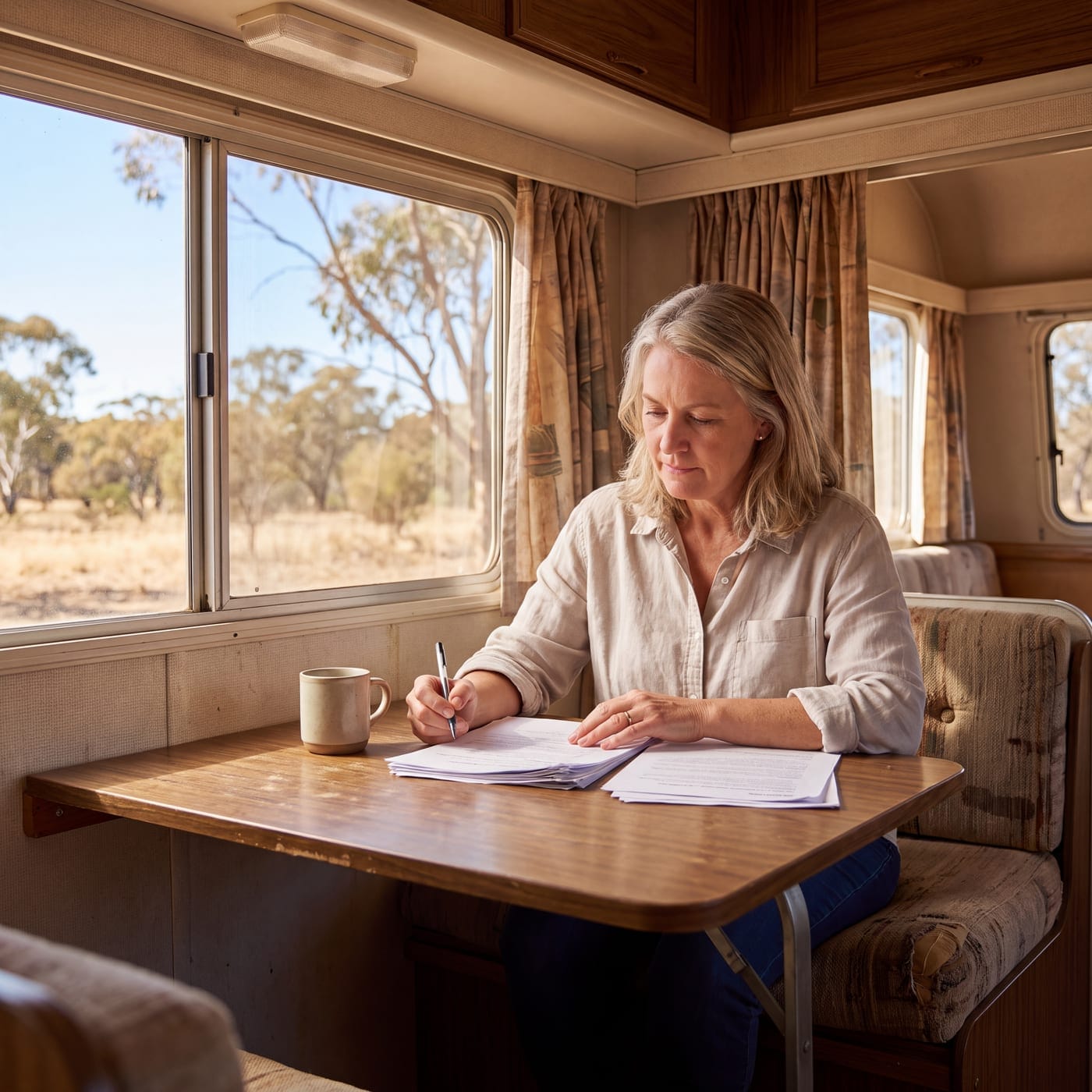
Most applicants need photo ID, proof of address, their last few payslips or tax returns, and recent bank statements if tax returns aren't up to date. If you have already chosen the van, add the purchase details, meaning make, model, year, price and the seller's information.
Having documents ready is the single easiest way to speed up your application. Most straightforward applications through our panel reach pre-approval the same day, and the delays that do happen are usually missing paperwork rather than lender hesitation. Our guide on how caravan loan pre-approval works covers the conditional approval stage in detail.
Ready to compare your options?
A broker searches the panel so you see what they can offer for your profile. Takes two minutes.
Get my quoteHow does the application process run, step by step?
It starts with a conversation, ideally before you commit to a van. Knowing your budget first means you shop dealer yards, caravan shows and private listings with a number you can trust.
Your broker then matches your profile against the lender panel and places the application where it fits best. That is one enquiry, compared across the panel, rather than a trail of separate applications marking your credit file.
Pre-approval confirms your budget, you find the caravan, and the file converts to formal approval with the van's details added. Settlement follows, with the lender paying the dealer or seller directly and the caravan registered with the loan noted against it. Then you hitch up. Start to finish, it is days rather than weeks for most buyers.
Can you get caravan finance with bad credit?
Usually, yes, though the path changes. Past defaults, a discharged bankruptcy or a thin credit file move the application from mainstream lenders to specialists who assess what happened, how long ago and what your conduct has been since. The van itself still matters, because a solid asset at a sensible price supports a harder application.
What hurts most is applying to multiple different lenders. Each declined application adds an enquiry to your file and makes the next lender warier. The better route is to put the full picture in front of a broker, then have a single application placed with a lender whose policy can actually accept it.
If your credit has improved since an earlier loan, the reverse applies. You may now qualify with lenders that would have declined you before, which is one of the common reasons borrowers later refinance.
What mistakes should first-time caravan buyers avoid?
Accepting dealer finance without comparing it. Dealer finance can be perfectly good, but it is one option presented at the moment you are least likely to check it against the market. Compare before you sign, not after.
Applying to several lenders directly. Every formal application adds an enquiry to your credit file, and clusters of enquiries make lenders cautious. One brokered application avoids the pile-up.
Stretching the budget before checking the whole cost of ownership. Insurance, storage, servicing and tow vehicle upgrades all sit alongside the repayment. Run the numbers on the caravan finance calculator with realistic margins, and read our guide on what deposit you need before you settle on a figure.
Frequently asked questions
Ready to compare your options?
This guide is general information. When you are ready, see how it applies to your situation.

This guide is general information, not financial or credit advice. Consider your circumstances and check details with your broker or accountant.
Start here
Compare lenders in two minutes
No obligation, no impact on your credit score at quote stage. A broker will follow up with real options matched to your situation.
Step 1 of 3
What are you financing?
Select a finance type and tell us your loan amount.