
Car Finance
Car Finance for Self-Employed and ABN Holders
By Joseph Nowland, Director and Senior Finance Broker · 18 July 2026 · 3 min read
Last reviewed 26 July 2026
The payslip problem
Standard car loan assessment is built around employees. Payslips, a PAYG summary, a tidy fortnightly income, that sort of thing. Self-employed income rarely looks like that. It arrives unevenly, gets reinvested into the business, and is often reduced on paper by legitimate deductions that make sense for tax but shrink your declared income.
None of that means you can't service a loan. It means the standard assessment doesn't read you well. The fix is simply a different set of lenders and documentation paths, ones built around how self-employed income actually works.

The full-doc path still exists
If your tax returns are up to date and show consistent income, many mainstream lenders will assess you like any other applicant, usually asking for two years of returns and sometimes business financials. If that is you, the widest panel is open and nothing about being self-employed holds the application back.
The trouble starts when returns are behind, income has grown since the last return was lodged, or deductions have compressed the taxable figure. That is where low-doc lending earns its keep.
How low-doc car finance works
Low-doc car finance is commercial lending for ABN holders where the lender accepts a lighter document set instead of full financials. For most applicants, that means a driver's licence, front and back, is all that's needed. Some lenders will also ask for a few months of banking, but generally only when the ABN has been registered for less than 6 months.
Because the vehicle is financed for business use, the loan is typically structured as a chattel mortgage. Your business owns the car from day one, the lender registers a security interest, and the GST, interest and depreciation treatment may benefit the business. Your accountant should confirm the tax position for your structure.
Assessment leans on your ABN and trading history rather than declared taxable income, which often reads self-employed borrowers more fairly. Deposits and asset backing help but are not always required, and straightforward applications can move quickly, sometimes the same day, because there is simply less paperwork to review.
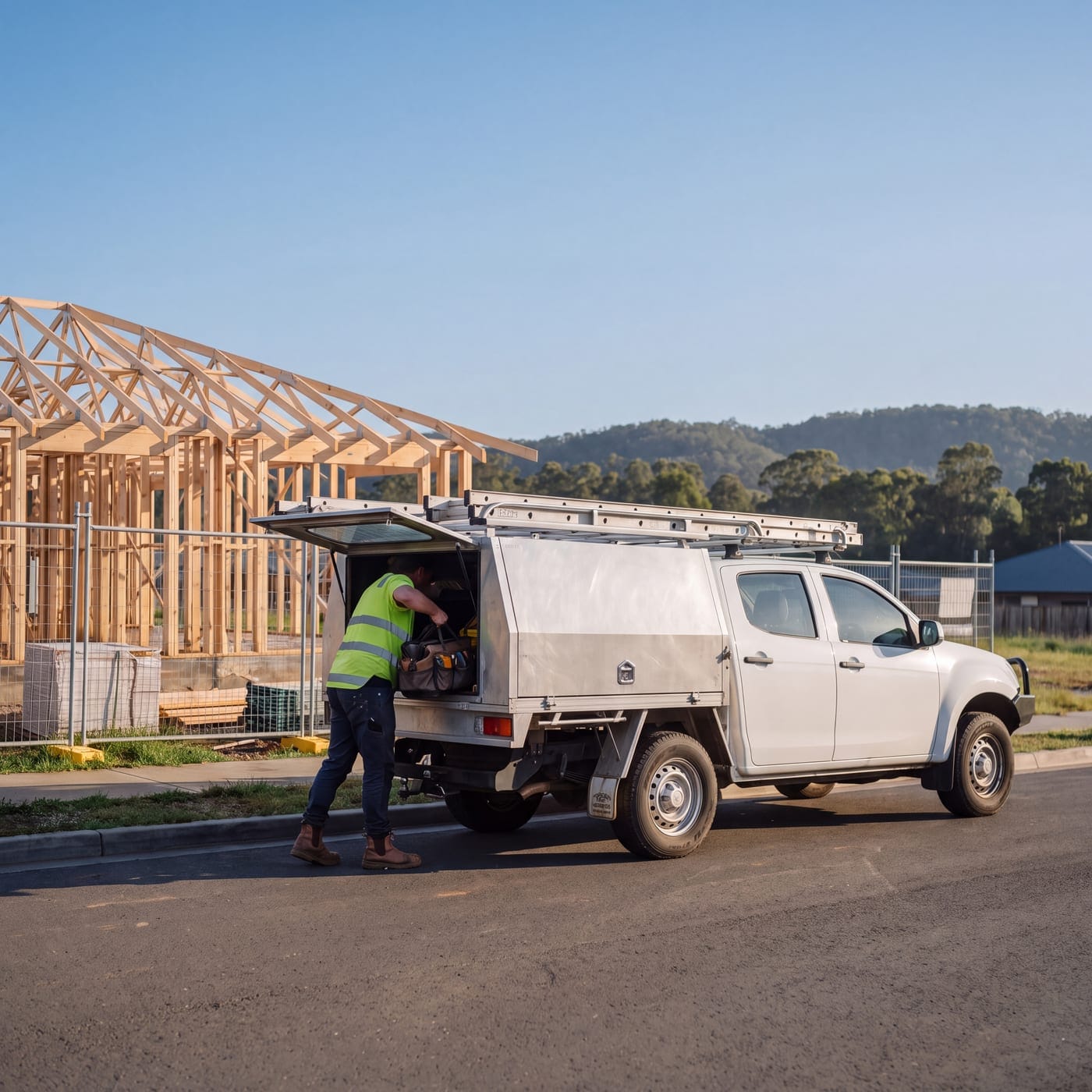
Ready to compare your options?
A broker searches the panel so you see what they can offer for your profile. Takes two minutes.
Get my quoteThe ABN tenure question
Most specialist low-doc lenders want to see an ABN registered for at least 12 months, and some prefer 24. That is the comfortable middle of the market. We do have lenders that can consider new ABNs depending on the other strengths of the application, including where you've moved straight from PAYG employment in the same trade or industry, for example an electrician going out on their own. Newer ABNs without that continuity face more limited options and should expect more questions.
GST registration, where your turnover requires it, also reads as a positive signal of an established business. If your ABN is young, have the upfront conversation about which lenders will actually consider you before anything touches your credit file.
Getting the paperwork right first time
Whatever the path, clean documentation is the difference between a fast approval and a grinding one. For low-doc that means your driver's licence, front and back, plus a few months of banking on standby if your ABN is younger than 6 months. Anything heavier, BAS, full bank statements, an accountant's letter, belongs to mid-doc lending, not this product.
Then let the matching do the work. Every low-doc lender has its own mix of ABN rules and asset preferences, and Morella Finance knows where the lines sit across the lender panel, so your application goes where it fits rather than where it will bounce.
Self-employed does not mean unfinanceable. It means the lender has to be chosen deliberately, which is precisely the job a broker exists to do.
Ready to compare your options?
This guide is general information. When you are ready, see how it applies to your situation.



This guide is general information, not financial or credit advice. Consider your circumstances and check details with your broker or accountant.
Start here
Compare lenders in two minutes
No obligation, no impact on your credit score at quote stage. A broker will follow up with real options matched to your situation.
Step 1 of 3
What are you financing?
Select a finance type and tell us your loan amount.
Keep reading
Related guides
 Car Finance 101: The Complete Guide for First-Time BuyersThinking about financing your next car? How a car loan actually works, what lenders look at, and how the process runs from enquiry to settlement.
 Balloon Payments Explained: Pros, Cons and How They WorkA balloon payment lowers your monthly car loan repayment by deferring a lump sum to the end of the term. What that costs in interest, and how to plan.
 How Car Loan Pre-Approval Works (and Why It Matters)Pre-approval tells you what you can borrow before you shop, strengthens your negotiating position and takes dealer finance pressure off the table.