Motorbike Finance
Buying a Motorbike Privately: How Finance Works
By Joseph Nowland, Director and Senior Finance Broker · · 6 min read
Can you get finance for a private motorbike sale?
Yes. Bikes change hands privately constantly, and lenders have built private sale motorbike finance processes to match. The loan is the same secured structure as any used bike loan. The difference lies in the verification and settlement work wrapped around it.
The lender needs three facts a dealer would normally establish. The seller really owns the bike, nothing is owed against it to another financier, and the payment will land safely. Every extra step in a private purchase exists to prove one of those three things, and each one protects you as much as the lender.
How do you verify the seller actually owns the bike?
Start with the registration papers and the seller's photo ID. The names should match, and the address on the ID should line up with where you are inspecting the bike. A seller meeting you in a car park with a bike registered to someone else is a conversation to walk away from, whatever the story.
Then check the VIN or frame number on the bike against the registration papers and the listing. Engine numbers should match too where recorded. A mismatched, ground-off or altered identifier is a stop sign. It can indicate a rebuild, a stolen machine or a bike assembled from parts, and it needs resolving before any money moves.
What is a PPSR check and why does it matter?
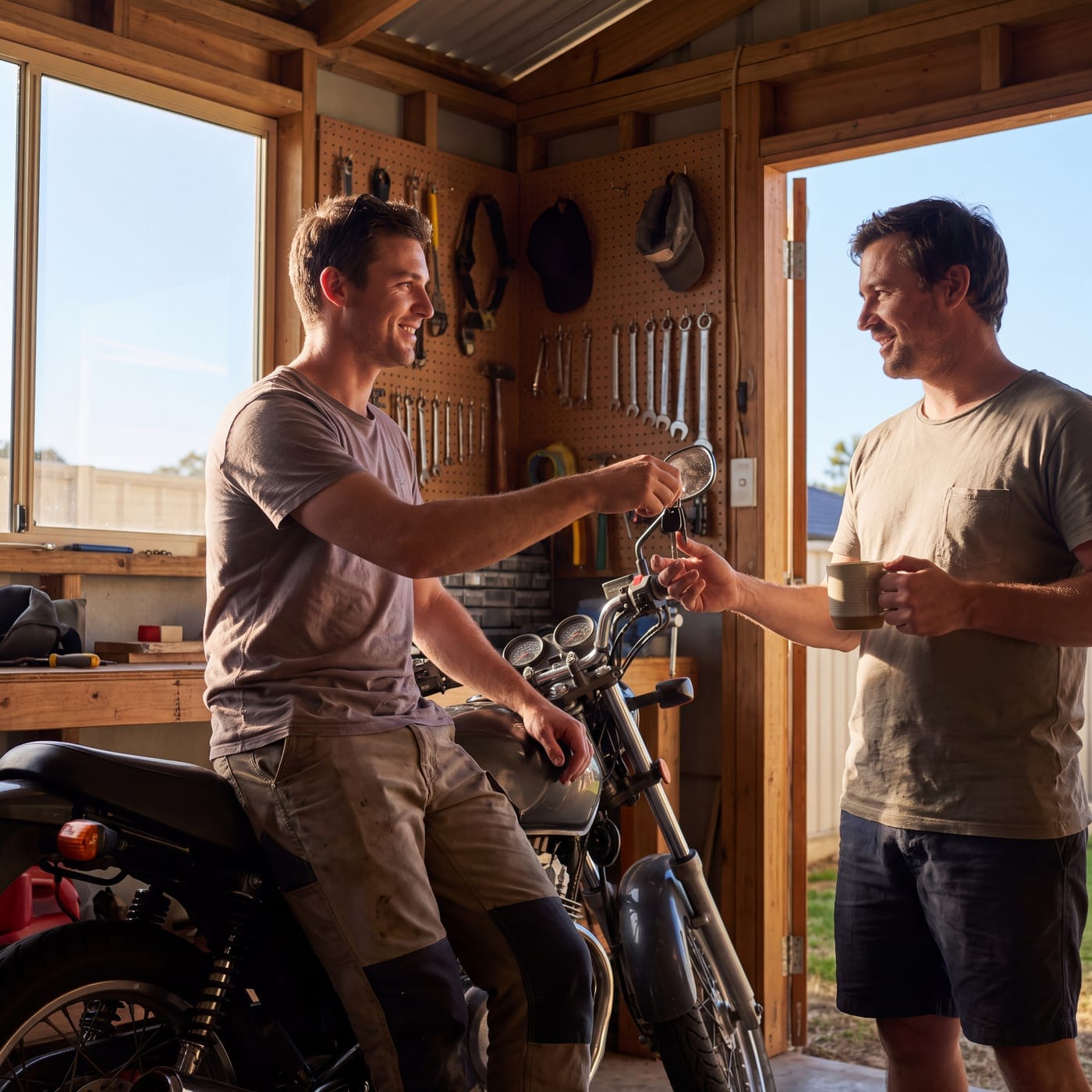
A search of the Personal Property Securities Register against the bike's VIN shows whether any lender holds a registered security interest over it. Buy an encumbered bike without clearing the debt and the previous owner's lender can still have rights over your new machine. The search is quick and non-negotiable.
The PPSR result also flags whether the bike has been recorded as stolen or written off, which is exactly the history a polished listing does not mention. These checks happen as part of settlement anyway, but running your own PPSR search early in the negotiation costs little and can save you walking further down a dead end.
Finding an encumbrance is not fatal. It just means the seller still owes money on the bike, and their loan gets paid out at settlement, documented properly, before or alongside the balance reaching them.
Ready to compare your options?
A broker searches the panel so you see what they can offer for your profile. Takes two minutes.
Get my quoteHow does settlement work in a private bike sale?
The lender pays the seller directly. The seller provides bank details and, where money is still owing on the bike, a payout letter from their financier. Settlement then sends the money where it needs to go, clearing any encumbrance with the seller's financier first and paying the balance to the seller, documented at each step.
This is exactly the protection a private sale needs. The seller sees cleared funds from an institution, you get a documented transfer tied to the VIN and PPSR checks, and nobody hands over a bike for a wad of cash hoping for the best. Once payment clears, you collect the bike, transfer the registration, and the loan runs like any other secured bike loan.
Here is how a private bike purchase with finance runs from start to finish.
- Get pre-approved. Sort your finance before you negotiate, because private sellers respond to buyers whose money is organised.
- Check the seller and the papers. The names on the registration papers and the seller's photo ID should match. Then check the VIN or frame number on the bike against the papers and the listing.
- Run a PPSR search. It shows whether a lender holds a security interest over the bike, and whether it has been recorded as stolen or written off.
- Get the bike inspected. Lenders rarely require it, but an hour with a mechanic can turn up frame damage, worn chains and sprockets, tired tyres and skipped services.
- Collect the seller's documents. The seller provides bank details and, where money is still owing on the bike, a payout letter from their financier.
- Settle through the lender. The lender clears any money owing with the seller's financier first, then pays the balance to the seller, documented at each step.
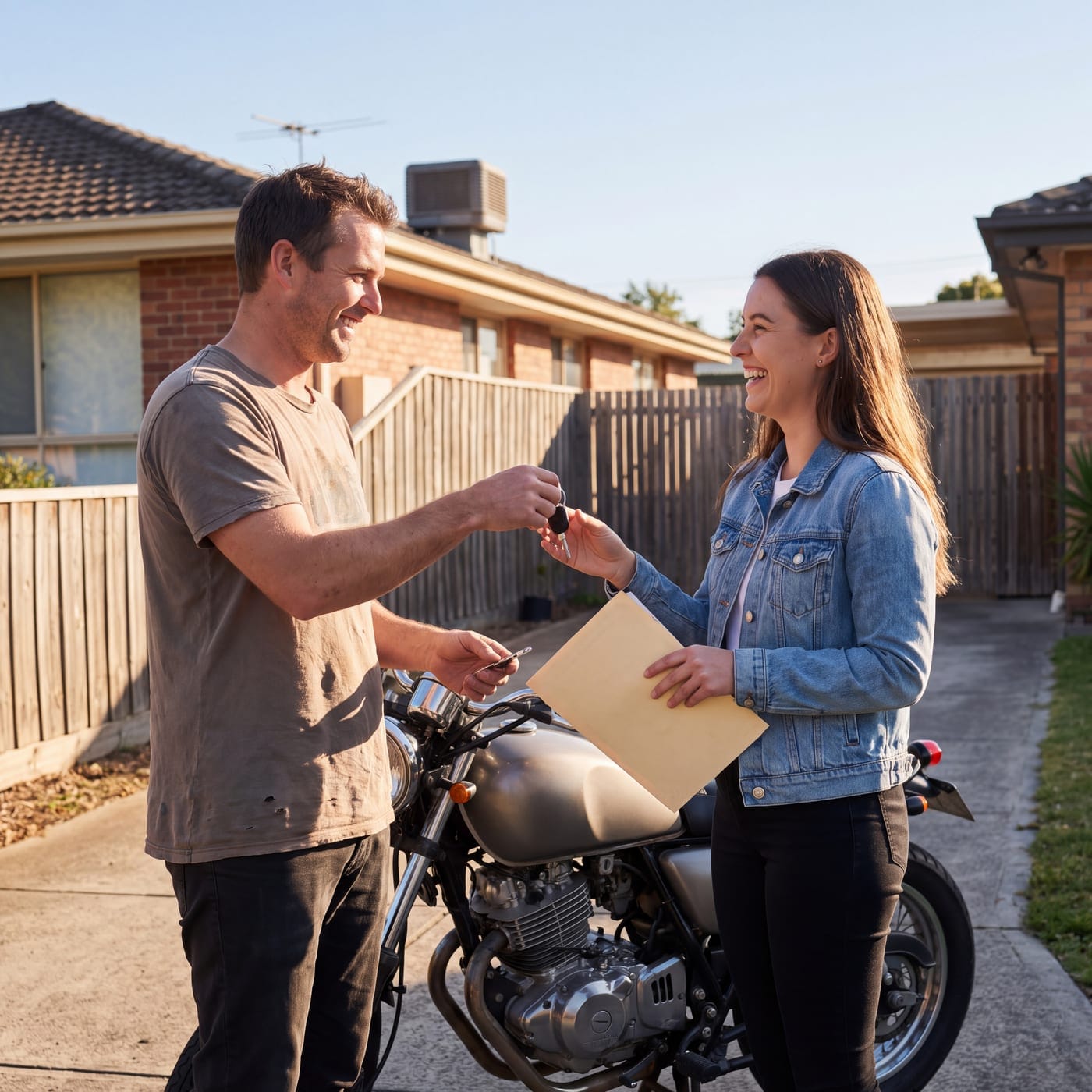
- Collect and register the bike. Once payment clears, you collect the bike and transfer the registration. An interstate purchase generally means re-registering the bike in your home state.
Can you buy a bike interstate with finance?
Yes, and the right bike is often a state away. Distance changes nothing about the finance, since the checks and the direct payment all run electronically. The physical side is what needs managing. Inspect the bike where it is or arrange an independent inspection there, because photographs conceal exactly the faults that cost money, and factor transport or the ride home into the budget.
Registration is state-based, and an interstate purchase generally means re-registering the bike in your home state, sometimes with an inspection required. Check your state's process before settlement so the bike is not stranded, legally speaking, between systems. The documented settlement process through motorbike finance lenders suits interstate deals well, since verified ownership, cleared encumbrances and institution-to-institution payment protect two parties who may never meet.
What do you and the seller each need to provide?
Your side of the file is photo ID, proof of address, income evidence and the application paperwork your broker prepares, ideally with pre-approval sorted before you negotiate, because private sellers respond to buyers whose money is organised. The seller supplies their own photo ID, the registration papers, the VIN and engine details, bank details for payment, and a payout letter if finance is owing.
An independent mechanical inspection is worth arranging even though lenders rarely require one on a bike. Frame damage from a drop, worn chains and sprockets, tired tyres and skipped services all surface in an hour with a mechanic, while they are still the seller's problem. Service books and receipts are the paper trail that separates a cared-for bike from a cleaned-up one.
From formal approval, budget around a week for the checks and direct payment to run before you ride away. One enquiry with Morella Finance puts the private-sale-friendly lenders from the panel side by side and manages the settlement end to end, and our guide on new vs used motorbike finance helps if you are still weighing the dealer path against a private buy.
| You (the buyer) | The seller |
|---|---|
| Photo ID | Photo ID |
| Proof of address | Registration papers |
| Income evidence | VIN and engine details |
| Application paperwork your broker prepares | Bank details for payment |
| Pre-approval, ideally sorted before you negotiate | A payout letter if finance is owing on the bike |
Checklist
Buying privately? Use our checklist.
The steps from finding a motorbike to picking it up, including what you do and what we organise with the seller and lender.
Frequently asked questions
It happens all the time and settlement is built for it. The seller gets a payout letter from their financier, your lender clears that debt directly, and whatever remains goes to the seller. The PPSR registration is then discharged and the bike comes to you free of the old loan.
Slightly. Ownership verification, VIN and PPSR checks and the direct payment to the seller usually add up to somewhere between three and seven business days after approval. Chasing the seller's documents early, above all a payout letter if finance is owing, is the best way to keep that short.
Only after your finance is pre-approved, and only with the terms in writing. Pay by transfer rather than cash, get a receipt naming the bike and VIN, and confirm the deposit is refundable if the bike fails an inspection or an encumbrance check. A seller who resists those basics is telling you something.
Ready to compare your options?
This guide is general information. When you are ready, see how it applies to your situation.
Popular loan types
This guide is general information, not financial or credit advice. Consider your circumstances and check details with your broker or accountant.
Start here
Compare lenders in two minutes
No obligation, no impact on your credit score at quote stage. A broker will follow up with real options matched to your situation.
Step 1 of 3
What are you financing?
Select a finance type and tell us your loan amount.
Keep reading
Related guides
 Motorbike Finance 101: The Complete GuideHow motorbike loans work in Australia, including what lenders assess, the documents you need and how the application runs from enquiry to settlement.
 New vs Used Motorbike FinanceNew and used bikes get different treatment from lenders. Age caps, kilometres, modifications and private sales all change the finance, and here is where.